The Shell Itself
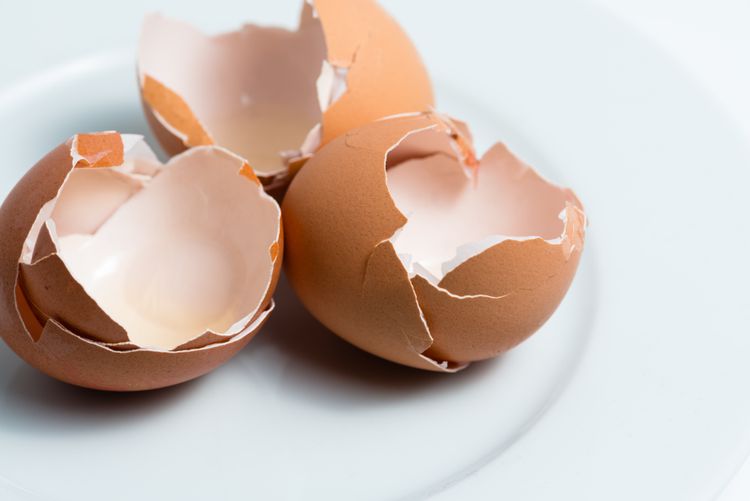
The egg shell protects and supports the internal soft structures (the yummy stuff). It is semi-permeable to air and water and helps prevent bacterial infection. About 94-95% of the dry egg shell is calcium carbonate (CaCO3 ), about 0.3% phosphorus and 0.3% magnesium and traces of sodium, potassium, zinc, manganese, iron and copper. The rest of the dry egg shell is made up of an organic matrix material which has calcium binding properties and its organization during shell formation plays a vital role in the strength of the egg shell. The strength of the shell is further dependent on the amount of shell present, relative to the egg size, shape and thickness.
Cuticle
The outermost part of the egg shell is the cuticle, also know as the ‘bloom’. This coating is vital in protecting the egg from outside bacteria, dirt, and other contaminants. The cuticle is a non-calcified, thin, water-insoluble coating composed mainly of glycoproteins. It renders the shell impervious to water and seals the pores (6,000-8,000 shell pores) on the shell to keep out dust and bacteria, but also plays a role in regulating moisture and gases.